Choose the right scope
Junk and debris removal: what to confirm
Start here when a property contains a mixture of unwanted contents and loose renovation material.
Identify what leaves, what stays and the condition you need for the next stage. Share access restrictions, attached services and any known material concerns for the site assessment.
What's included
- Carry-out from basements, main floors, upper floors and exterior areas
- Household junk, furniture and bulky movable contents
- Renovation and demolition debris that has already been made safe
- Single-item pickups through whole-property loads
- Separate handling for metal, clean wood and mixed debris
- Final broom sweep of the agreed work and loading areas
How the job runs
- 01
Discuss the load
Tell us where the material is, what it includes and whether stairs, elevators, parking rules or narrow access affect the carry-out.
- 02
Walk the site
We review volume, weight, travel paths, loading space and materials that need a separate disposal stream.
- 03
Confirm the scope
The written scope identifies included rooms, exterior areas, movable contents and demolition debris, along with anything that stays.
- 04
Protect the route
The crew establishes a practical path from each collection area to the vehicle or container and protects retained finishes as scoped.
- 05
Carry, sort and load
Items are removed in manageable loads while metal, clean wood and mixed debris are separated where practical.
- 06
Sweep the area
Loose debris is collected and the included areas are left broom-swept after the final load leaves.
Before we start
Owners should identify every area included in the cleanout, remove personal records and valuables, and confirm that the crew is authorised to remove the remaining contents. Building access, parking, elevator bookings and loading restrictions should be arranged before arrival.
Paint, fuel, chemicals, propane cylinders and other hazardous items cannot travel in a normal mixed load. Those materials need an approved disposal route through the appropriate public or specialised service.
Where building materials will be disturbed, OHSA section 30 makes the owner responsible for identifying designated substances before the work is tendered or arranged. Any required asbestos work affecting the demolition scope is handled by a qualified abatement contractor under O. Reg. 278/05 before ordinary demolition proceeds. Anchor Demolition Scarborough does not perform abatement.
A clear line between junk and debris
Movable contents are handled differently from material produced by demolition. Furniture, boxes and ordinary household items can usually be carried out before work begins, while drywall, framing, flooring and masonry need to be assessed as construction debris. Keeping the two streams visible helps the crew choose the right handling and receiving route.
A load can combine a property cleanout with renovation debris when the materials are accepted and the scope is clear. The crew does not hide unsuitable material inside a mixed load. If an item needs special handling, it is identified before loading so the rest of the work can proceed without a rejected delivery.
Sorting during the load-out
Metal, clean wood and mixed debris are separated when the site, material condition and receiving options make that practical. Sorting begins at the work area instead of after everything has been piled together. This keeps the loading zone orderly and reduces repeated handling.
For tight homes and shared buildings, material is moved in a sequence that keeps exits and common routes usable. The site walk establishes whether hand carry, carts or a container suits the property. The final scope states what leaves and which rooms or exterior areas receive the closing sweep.
Related work
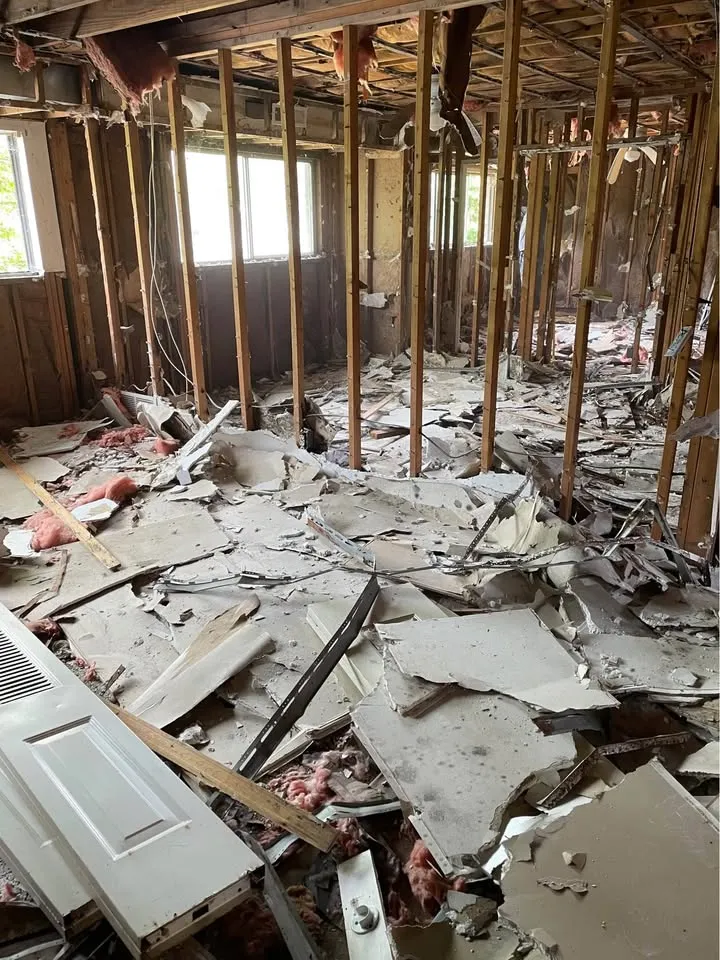
Broken finish material in a stripped room 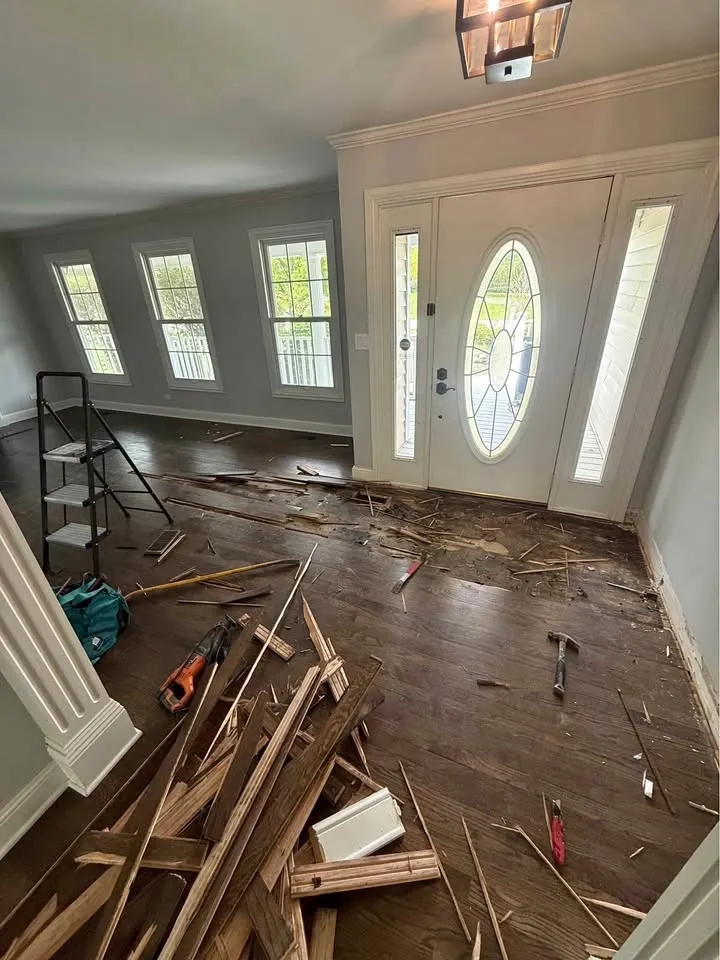
Flooring pieces in an interior work area 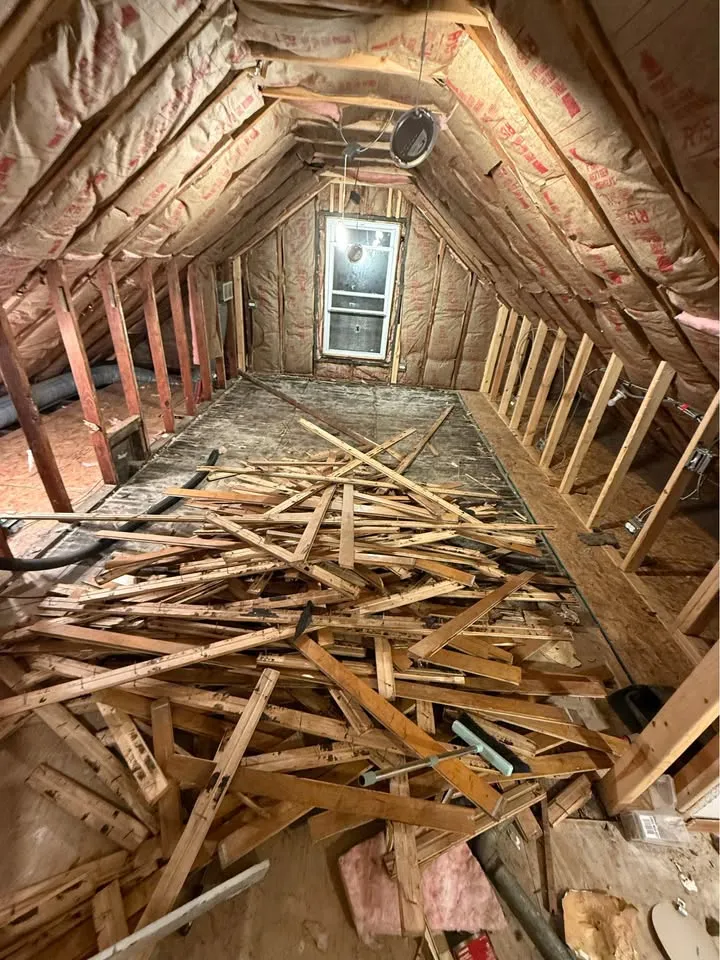
Roof framing and loose timber
Questions we get asked
- Can your crew carry items out from an upper floor or basement?
- Yes. Carry-out can be planned from any floor where the route is safe and included in the written scope. Stairs, door widths, elevators, common areas and parking access are reviewed first so the crew arrives with a workable loading plan.
- What cannot go in a normal junk or debris load?
- Hazardous products such as fuel, paint, chemicals and propane cylinders require an approved separate disposal stream. Suspected asbestos-containing material also cannot be treated as ordinary debris. Tell us about uncertain items before the site visit so they can be identified correctly.
- Do you separate material for recycling?
- The crew can separate metal, clean wood and mixed debris where the material condition, site space and receiving options allow. Sorting requirements are written into the scope so the loading sequence supports recovery without creating unsafe piles or blocking the property.
- Can you remove one bulky item instead of a full load?
- Single items can be included, as can contents from several rooms or an entire property. Access and item condition still matter. The site details help establish the labour, carry route and disposal stream before the pickup is confirmed.
Ready to discuss the work?
Tell us what needs to be removed. We will review the site and prepare a written scope.