
Choose the right scope
Rental unit strip-outs: what to confirm
Prepare a vacant unit for renovation after belongings and retained fixtures are identified.
Identify what leaves, what stays and the condition you need for the next stage. Share access restrictions, attached services and any known material concerns for the site assessment.
Prepare this scope
What's included
- Kitchen cabinets, counters and selected finishes
- Bathroom fixtures and finishes after service isolation
- Flooring and underlayment within the written limits
- Damaged drywall and non-structural assemblies
- Basement-unit carry-out and access planning
- Same-visit removal of debris created by the included strip-out
How the job runs
- 01
Walk the vacant unit
The landlord and crew identify each room, retained feature, access route and the renovation endpoint.
- 02
Review documents
Designated-substance information, building approvals and service requirements are confirmed before disturbance.
- 03
Mark the limits
Cabinets, finishes, flooring, drywall and fixtures are labelled as remove, retain or trade-handled.
- 04
Protect shared areas
Occupied-building routes, stairs, elevators and neighbouring units are addressed in the work plan.
- 05
Strip out and load
Included materials come out in a sequence that protects retained construction, with debris removed during the visit.
- 06
Prepare the handover
Loose debris is cleared and exposed areas are reviewed against the renovation scope.
Before we start
The landlord should provide the designer's or renovator's demolition plan, confirm the unit is legally available for work and remove all tenant belongings. Plumbing, electrical, gas and mechanical services in the work zone must be identified and made safe by the appropriate trades.
Where building materials will be disturbed, OHSA section 30 makes the owner responsible for identifying designated substances before the work is tendered or arranged. Any required asbestos work affecting the demolition scope is handled by a qualified abatement contractor under O. Reg. 278/05 before ordinary demolition proceeds. Anchor Demolition Scarborough does not perform abatement.
In an occupied building, the work plan must follow Toronto Municipal Code Chapter 591 and property rules. Review the existing Toronto demolition noise guide rather than relying on an assumed schedule.
Strip back to what the renovation keeps
The useful endpoint is not simply an empty room. A kitchen may retain walls and service locations while cabinets, counters and flooring leave. A bathroom may keep a tub or partition while other finishes are removed. The written plan identifies those decisions before tools enter the unit.
Damaged drywall is removed only to the agreed boundaries, allowing the renovation team to assess framing and services without losing sound material unnecessarily. Structural walls and uncertain assemblies remain untouched until the designer or appropriate professional confirms the scope.
Access in apartments and basement units
Basement units can involve narrow stairs, limited exits and a longer carry route. Apartments may require elevator bookings, corridor protection and coordination around residents. The site walk establishes how debris leaves without blocking common paths or spreading dust into occupied areas.
Debris created by the included strip-out is carried out under the agreed loading plan. Movable contents should be handled first through a turnover cleanout where needed. The final sweep prepares the unit for the next trade but does not replace construction cleaning.
Related work
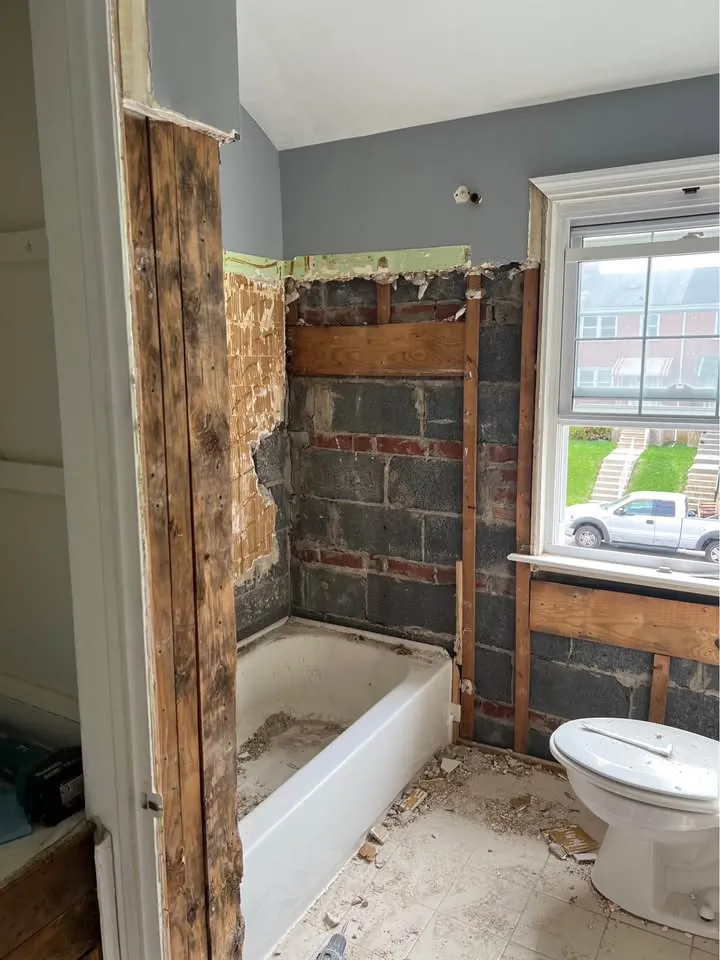
Bathroom with opened wall 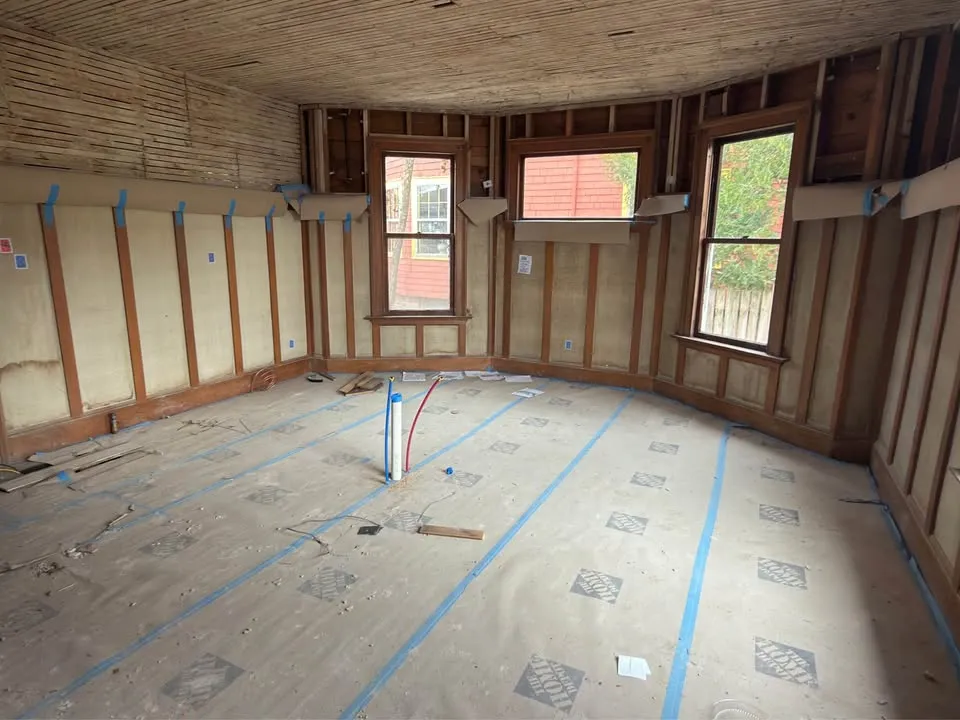
Interior room with exposed framing 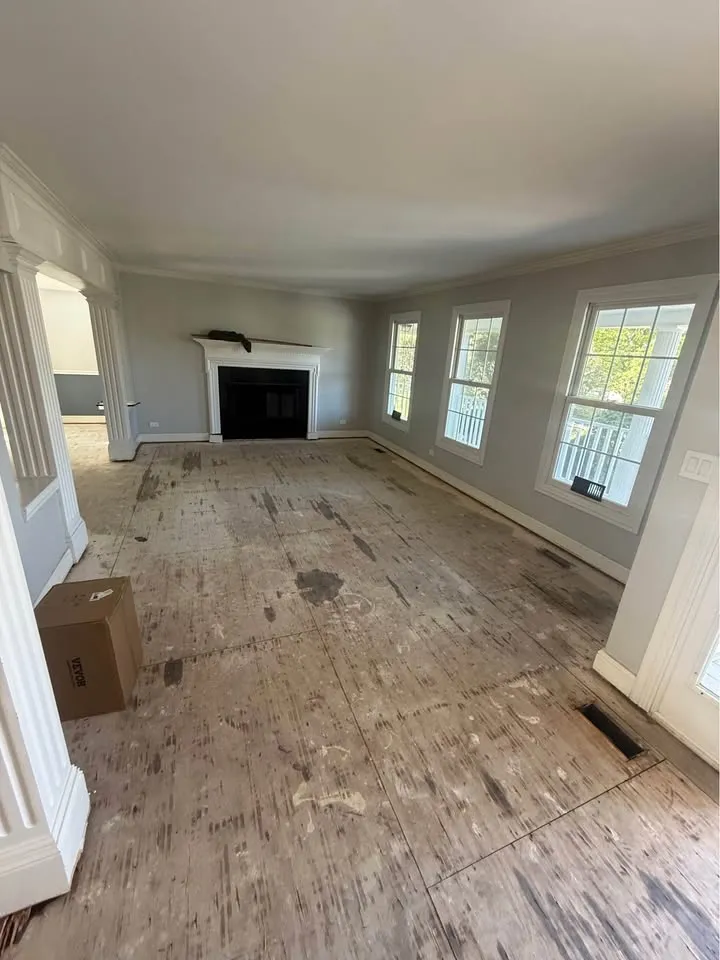
Room with floor covering removed
Questions we get asked
- Can you strip out only one room in a rental unit?
- Yes. The written scope can be limited to a kitchen, bathroom or another defined room. Shared services, retained finishes and the debris route are still reviewed so work in one area does not expand into the rest of the unit.
- Who handles asbestos or other designated substances?
- The owner provides the designated-substance information required by OHSA section 30. If the review identifies material governed by O. Reg. 278/05, a qualified abatement contractor completes that work before Anchor begins demolition. Anchor does not perform abatement.
- How is noise handled in an occupied building?
- The plan follows Toronto Municipal Code Chapter 591, current property rules and the access arrangements supplied by management. The existing noise guide should be reviewed for scheduling context instead of assuming that every building permits the same work period.
- Does strip-out debris leave during the visit?
- Debris produced by the included work is removed under the agreed loading plan when conditions match the confirmed scope. Unrelated tenant contents or hazardous material are separated and require the appropriate cleanout or disposal process.
Ready to discuss the work?
Tell us what needs to be removed. We will review the site and prepare a written scope.