Choose the right scope
Demolition and renovation debris: what to confirm
Load out material already released from the work. Further dismantling is a separate scope.
Identify what leaves, what stays and the condition you need for the next stage. Share access restrictions, attached services and any known material concerns for the site assessment.
What's included
- Loading loose renovation and demolition debris
- Carry-out from interior work areas and exterior piles
- Same-visit loading when access and the confirmed load allow
- Container planning where the private driveway allows
- Separation of metal, clean wood and mixed debris
- Closing sweep of the agreed loading and work areas
How the job runs
- 01
Describe the debris
Share the material types, their location and how the renovation or demolition area can be reached.
- 02
Review access
We check stairs, gates, driveway width, overhead conditions and the route between the pile and loading point.
- 03
Confirm material safety
Unknown, hazardous or potentially designated material is identified before it enters the load.
- 04
Choose the loading plan
The scope sets direct crew loading or a container position on private property where access permits.
- 05
Sort and remove
Recoverable streams are kept separate where practical, while mixed debris is loaded in a controlled sequence.
- 06
Complete the sweep
The crew collects loose remnants from the included areas and confirms the agreed debris is gone.
Before we start
The contractor or owner should consolidate the work boundary, identify who created the debris and disclose anything that may be sharp, unusually heavy, wet or mixed with household hazardous waste. Access to occupied rooms and common areas must be approved.
A container can be considered where the driveway provides safe delivery and pickup space. If placement would occupy a street, sidewalk, boulevard or public laneway, the owner or contractor must address the required City of Toronto Street Occupation Permit before delivery.
Where building materials will be disturbed, OHSA section 30 makes the owner responsible for identifying designated substances before the work is tendered or arranged. Any required asbestos work affecting the demolition scope is handled by a qualified abatement contractor under O. Reg. 278/05 before ordinary demolition proceeds. Anchor Demolition Scarborough does not perform abatement.
Loading a completed work area
Debris from another crew can be loaded without taking over the demolition scope. We first confirm that removal work is complete, services are safe and the pile contains only disclosed material. This separation gives the builder or homeowner a defined cleanup service rather than an open-ended responsibility for unknown conditions.
Interior debris is carried along the agreed route in manageable loads. Exterior piles are approached so the crew can work without spreading material across driveways, sidewalks or neighbouring areas. Nails, broken edges and dense pieces affect handling, so the pile should remain accessible rather than buried behind retained materials.
Direct haul or container
Direct loading suits a prepared pile and a confirmed collection visit. A container can support ongoing work when private-property access permits safe placement and retrieval. Neither choice is assumed from a photograph alone because turns, wires, gates and surface condition affect the delivery path.
Sorting takes place before mixed material obscures reusable or recyclable streams. Metal, clean wood and mixed debris can move separately when practical. Once loading ends, the crew sweeps the agreed area; janitorial cleaning and finishing work are outside this service.
Related work
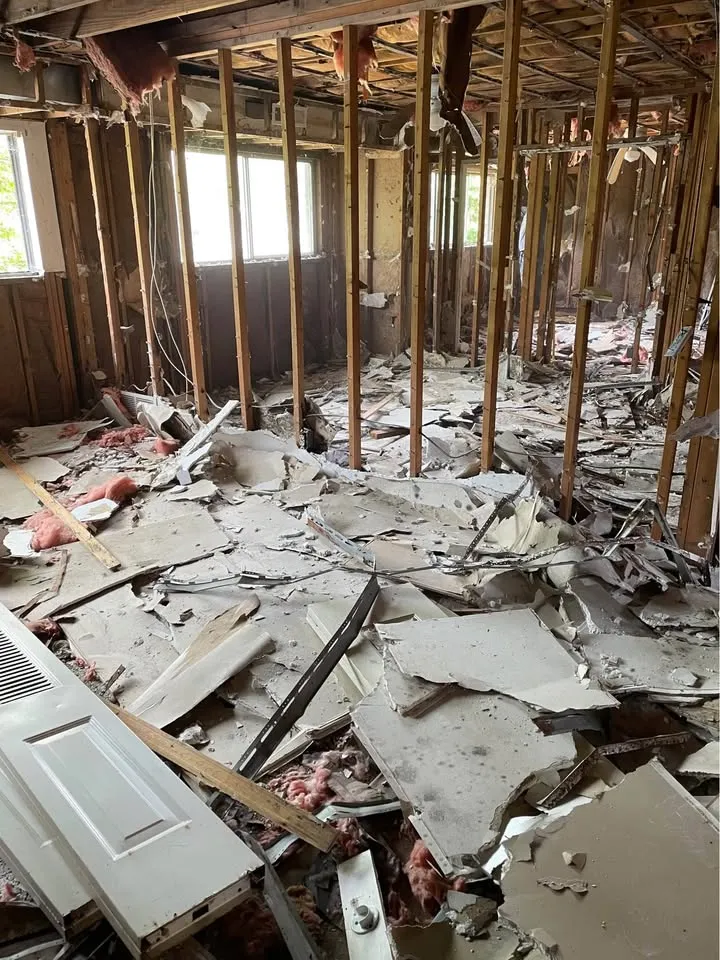
Broken finish material in a stripped room 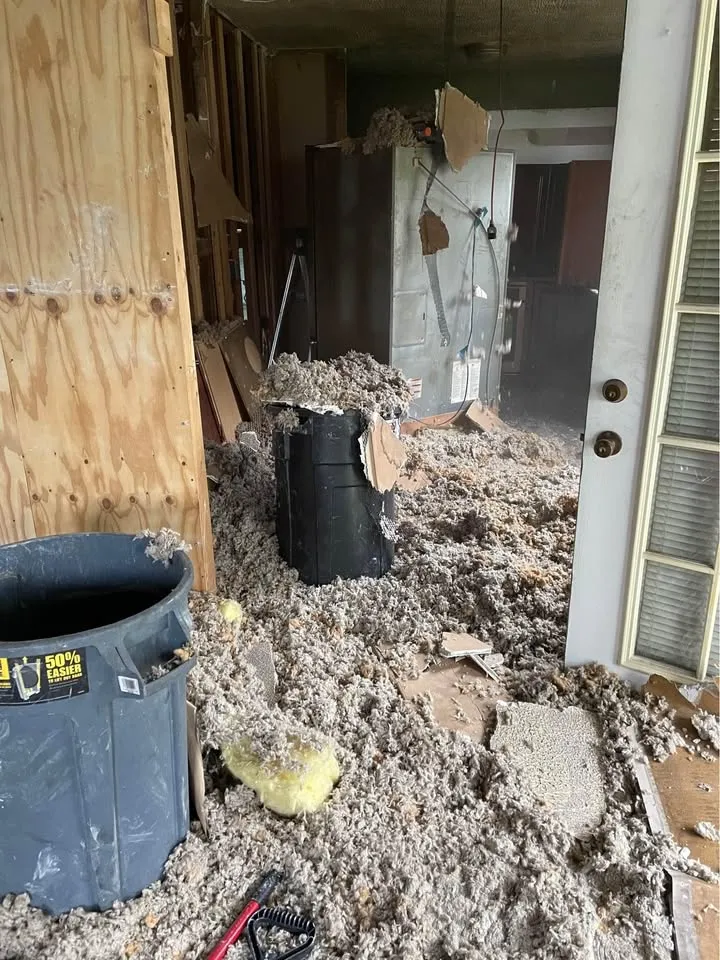
Interior removal debris 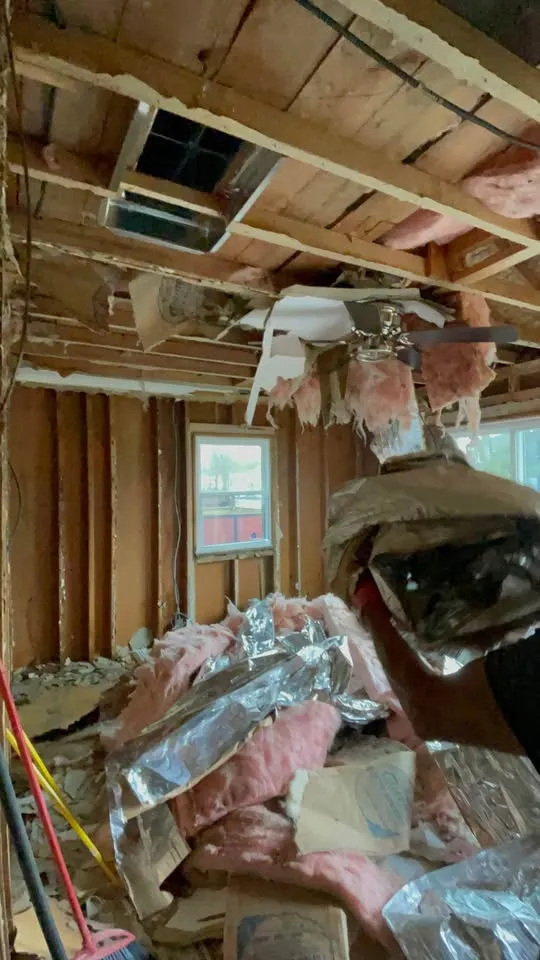
Debris inside a framed room
Questions we get asked
- Can you remove debris produced by my renovator?
- Yes. The scope can cover material produced by another contractor once the work area is released for loading and the contents are disclosed. Unknown or unsafe material is paused for identification rather than mixed into the outgoing load.
- Will the debris leave under the agreed loading plan?
- Direct loading is intended to remove the confirmed material during the collection visit when access and the actual load match the scope. If conditions differ, the crew explains what can proceed and what requires a revised plan before claiming completion.
- Is a driveway bin always possible?
- No. The truck approach, clear width, overhead space, turns and surface condition all matter. A narrow driveway may call for direct loading or another arrangement. Public-space placement requires City permission before a container arrives.
- How do you handle mixed renovation material?
- The crew identifies metal, clean wood and mixed debris before loading and separates streams where practical. Hazardous products and suspected designated substances do not enter an ordinary construction load and require the appropriate separate process.
Ready to discuss the work?
Tell us what needs to be removed. We will review the site and prepare a written scope.