
Choose the right scope
Office and commercial junk removal: what to confirm
Furniture and approved business contents, with ownership, loading rules and sensitive records resolved.
Identify what leaves, what stays and the condition you need for the next stage. Share access restrictions, attached services and any known material concerns for the site assessment.
What's included
- Desks, chairs, tables and office furniture
- Freestanding shelving and prepared non-structural fixtures
- Electronics released for an appropriate receiving stream
- Authorised inventory and packaging materials
- Loading from offices, plaza units and small warehouses
- Sorting for reuse, donation and recycling where practical
How the job runs
- 01
Review the premises
We identify the unit, collection areas, access points, loading rules and any neighbouring operations.
- 02
Confirm owner-handled material
The client removes records, data-bearing devices and anything requiring secure or specialised handling.
- 03
Define what leaves
Furniture, shelving, fixtures, electronics and inventory are listed separately from retained assets.
- 04
Set the loading window
Property approvals, elevator access, dock use and workable hours are confirmed before crew arrival.
- 05
Sort and load
Accepted contents are moved along the approved route and separated for suitable receiving streams where practical.
- 06
Complete the handover
The listed areas receive a broom sweep and are checked against the written clearout scope.
Before we start
The business or property representative must remove data-bearing devices, confidential records and any material requiring secure destruction before the crew starts. Anchor does not certify data erasure or document destruction.
The client should arrange keys, loading dock or door access, elevator bookings, parking and permission for the agreed work period. Inventory ownership and authorisation to dispose must be confirmed in writing.
Where building materials will be disturbed, OHSA section 30 makes the owner responsible for identifying designated substances before the work is tendered or arranged. Any required asbestos work affecting the demolition scope is handled by a qualified abatement contractor under O. Reg. 278/05 before ordinary demolition proceeds. Anchor Demolition Scarborough does not perform abatement.
Planning around a commercial property
A closed office, moving business and occupied plaza unit create different access conditions. The site walk checks door sizes, elevator or stair routes, loading points and property-management requirements. The plan keeps outgoing material within the approved unit and loading zone instead of spilling into customer or tenant paths.
Freestanding furniture and shelving can usually be assessed as contents. Attached fixtures, electrical equipment and building systems require a clearer removal boundary. Anything connected, structural or part of the leased premises stays until the responsible party confirms its status and the appropriate trade makes services safe.
Sorting without unsupported promises
Reusable furniture, metal, cardboard, electronics and mixed contents can be separated where their condition and available receiving streams allow. Donation may be considered without promising acceptance by any organization. Items that cannot be reused follow the suitable recycling or disposal route.
The service ends with accepted contents removed and the included areas broom-swept. Detailed cleaning, records management, inventory valuation and warehouse operations are not included. If demolition follows, a separate commercial strip-out scope defines the building materials to be disturbed.
Related work
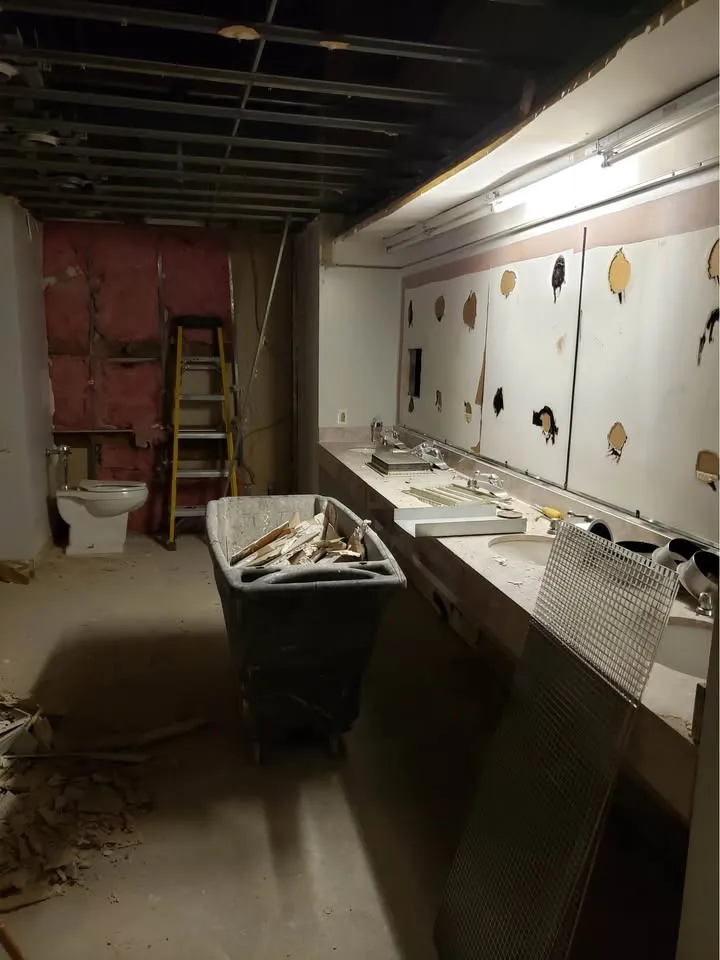
Interior with cabinetry and exposed ceiling 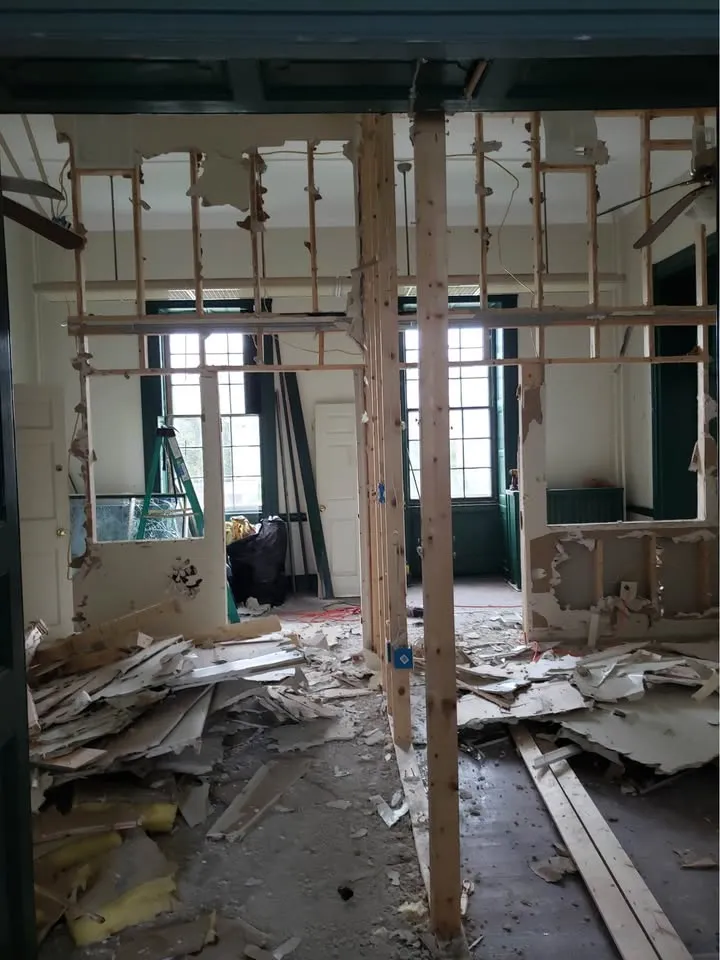
Exposed wall framing beside windows 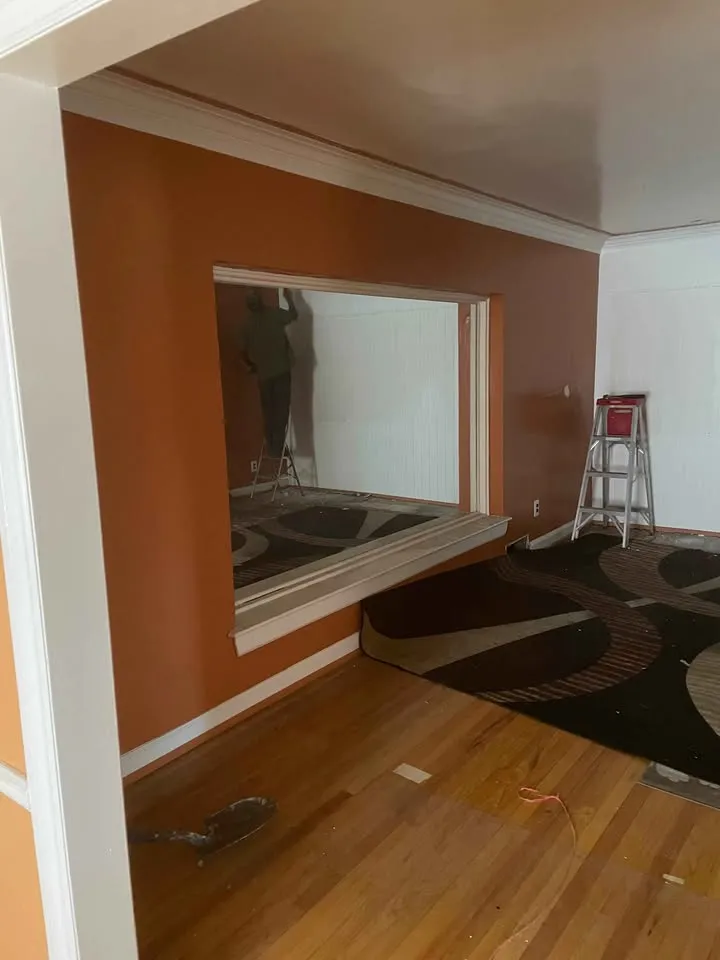
Room with a large wall mirror and rolled carpet
Questions we get asked
- Can you clear an office after a business closes?
- Yes, when the authorised client identifies which furniture, shelving, electronics and inventory may leave. Lease obligations and attached fixtures should be resolved first so the crew does not remove property that belongs to the landlord or must remain.
- What happens to computers and business records?
- Data-bearing devices and confidential records are the owner's responsibility before collection. Anchor does not provide certified data destruction or records disposal. Other electronics can be assessed for an appropriate receiving stream once sensitive material has been removed.
- Can work follow property loading hours?
- The loading plan can reflect building access and approved work periods. The client or property manager must provide the actual rules, elevator bookings and dock permissions. The confirmed scope then sets a practical sequence within those constraints without promising an unsupported completion time.
- Do you donate office furniture?
- Items can be sorted for possible reuse, donation or recycling when condition and receiving options allow, but acceptance by another organization cannot be guaranteed. Unaccepted material follows the disposal stream suited to its type.
Ready to discuss the work?
Tell us what needs to be removed. We will review the site and prepare a written scope.