
Cleanout coordination
Office electronics: release the data before the equipment
By Anchor Demolition Scarborough · Updated
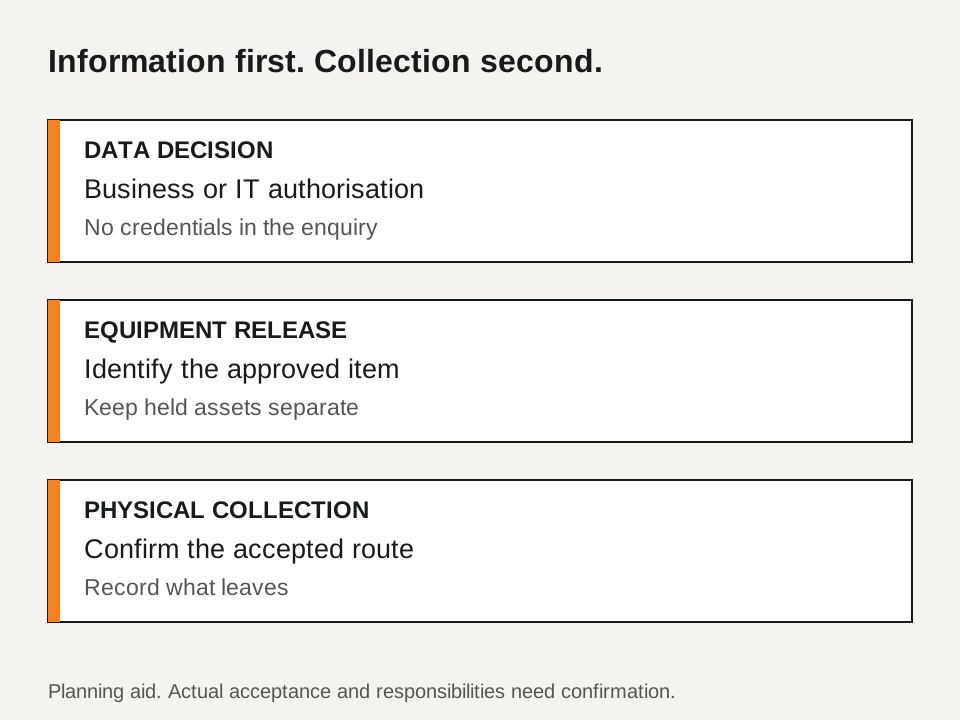
Original planning diagram. It describes decisions, not a completed project or a specialist service.
How can a business separate equipment collection from responsibility for its data?
Have the business release data-bearing equipment through its own approved process before arranging the accepted physical collection.
Use the business asset list
Identify devices by an internal reference and location, without sending account credentials or confidential contents to the removal provider. A printer or other office item may need the organisation's IT review even when it looks ready to leave. The business decides which assets can be retired and which must be retained.
Obtain the appropriate data decision
Assign data handling to the organisation's responsible person or approved specialist. Record when an item is released for physical collection. Anchor's commercial contents service does not certify data erasure, secure destruction or compliance with the business's retention obligations. Do not treat removal of the hardware as proof that information has been handled.
Confirm the receiving channel
Toronto's electronic-waste guidance distinguishes electronics from ordinary garbage and directs users to its item guidance and other recovery options. Check the channel and eligibility that apply to the business and item; household collection instructions are not blanket commercial acceptance. Ask the collection provider to confirm what is included.
Keep the two handovers traceable
Use one record for IT or records-management release and another for the physical collection. Cross-reference them through the asset identifier. For example, approved empty monitors may leave while a data-bearing device remains on hold. The collection team needs the release status, not access to the device or its information. Store the completed records through the business's normal process.
Details to bring to the discussion
Use the points below to explain the unresolved decisions when you contact the relevant service.
- Asset identifier
- Responsible IT/records contact
- Released or held status
- Accepted collection channel
- Physical collection reference
Continue planning
Check requirements for your property
For requirements discussed in this guide, consult the applicable municipality and current primary sources before arranging work.