
Commercial cleanouts
Restaurant closure: separate contents from connected equipment
By Anchor Demolition Scarborough · Updated
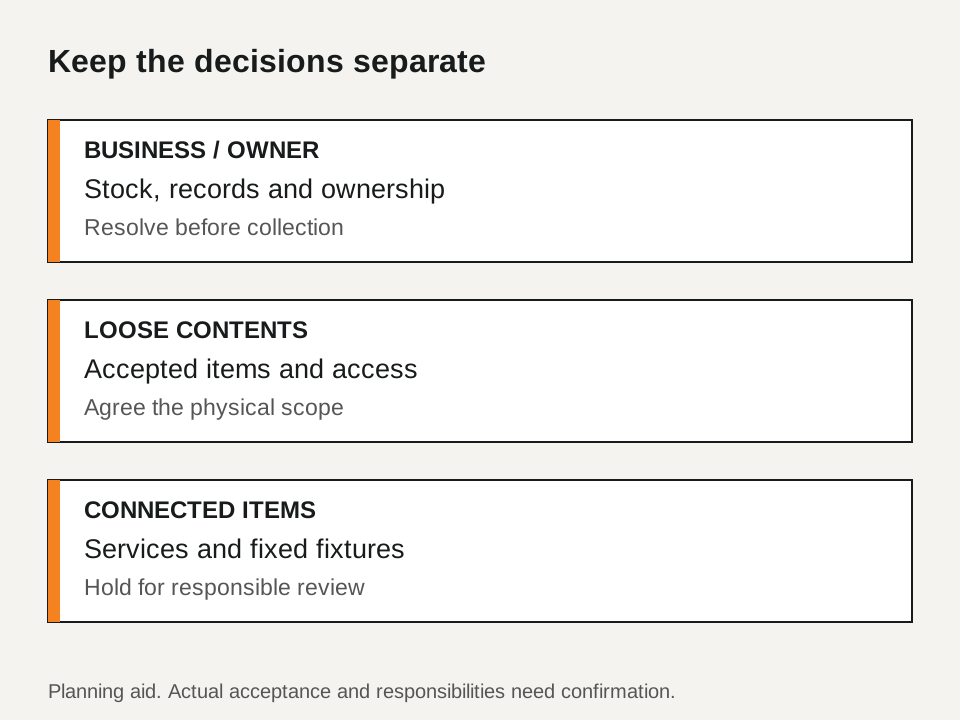
Original planning diagram. It describes decisions, not a completed project or a specialist service.
How can a business describe a restaurant clearout without treating connected kitchen equipment as ordinary furniture?
Separate business stock, approved loose contents and connected equipment so a general contents request does not imply specialist kitchen work.
Give stock its own decision
The business should decide what happens to stock and any materials outside an ordinary contents collection before asking for a removal visit. Do not mix that decision into a list of tables and chairs. Identify the authorised business contact and keep personal, employee and customer records within the business's own handling process.
List loose contents by area
Describe approved freestanding furniture and other ordinary contents in the dining, office or storage area. Note items retained by the owner or landlord. Anchor's commercial junk-removal service can assess the actual accepted contents and route; the restaurant address does not establish acceptance of every item on site.
Hold connected equipment for the right review
Cooking equipment, refrigeration, counters, extraction and other attached installations may involve services or building interfaces. List them separately for the responsible trades and property contact. This guide does not offer commercial-kitchen disconnection, extraction-system removal, grease-system work or specialist treatment. Those capabilities are not inferred from general commercial cleanouts.
Agree where the contents scope ends
Show the loading route and the agreed endpoint for accepted loose items. Keep deep cleaning, reinstatement and the premises return process with their responsible parties. As an example, approved dining chairs may be ready for assessment while connected equipment remains excluded. A useful request makes that distinction before collection, rather than calling the entire premises an empty-out job.
Details to bring to the discussion
Use the points below to explain the unresolved decisions when you contact the relevant service.
- Business stock decision
- Approved loose contents
- Connected equipment on hold
- Responsible trade/property contacts
- Accepted load and handover exclusions
Continue planning
Check requirements for your property
For requirements discussed in this guide, consult the applicable municipality and current primary sources before arranging work.