Debris removal
Roofing tear-off debris: staging, bins and where old shingles go.
By Anchor Demolition Scarborough · Updated
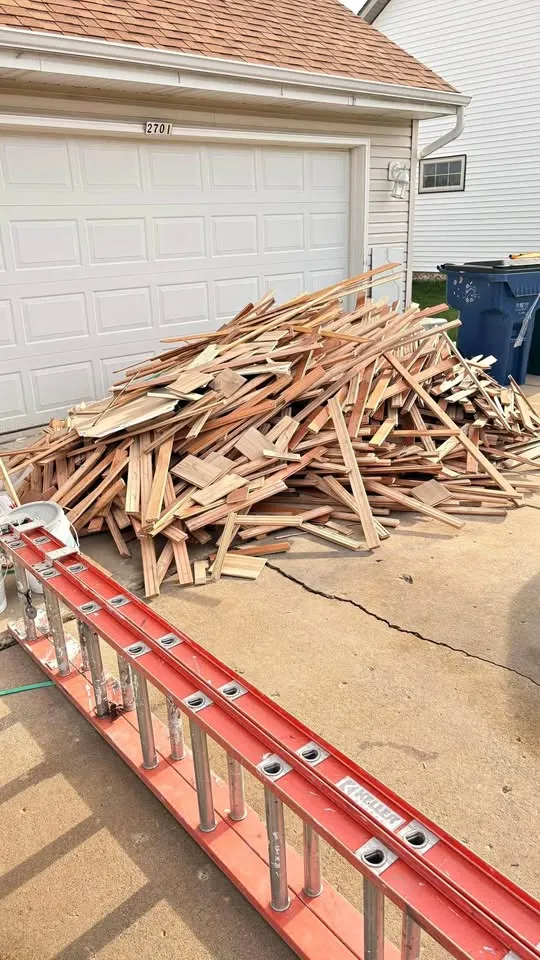
A roof tear-off produces a dense debris stream that needs a protected drop area and a dedicated loading plan.
The roofer controls the roof work, while a debris crew can manage the container, ground staging and haul-away when those responsibilities are assigned clearly.
Know what a tear-off produces
The load can include shingles, underlayment, flashing, nails and sections of damaged sheathing discovered during the roofing work. Older roofs may contain more than one existing layer. Each item needs to remain within the controlled drop and staging area rather than scattering across the driveway or gardens.
The roofer identifies material coming off the roof and keeps reusable tools and new roofing supplies separate. The debris plan allows for material uncovered during removal without assuming that every hidden layer belongs in an ordinary shingle load.
Keep shingles in their own heavy load
Shingles are dense and become especially difficult to handle when wet. They commonly travel in a dedicated bin or load rather than being mixed with bulky household junk. The container provider's acceptance and loading rules control what can accompany them.
Material is distributed so the container remains stable and safely serviceable. Workers do not build concentrated piles above the sides or use loose surrounding ground as overflow. Where the driveway cannot hold a container, the public-space question is resolved before delivery.
Check older roofing materials
Some older roofing products can contain asbestos. The owner's designated-substance information under OHSA section 30 and any required assessment identify affected material before tear-off is arranged. Suspect layers are not tested by breaking them during ordinary roof work.
Where asbestos-containing roofing material is confirmed, a qualified abatement contractor handles it under O. Reg. 278/05. Anchor does not perform abatement, and regulated material does not enter the ordinary roofing-debris load.
Protect the drop zone
The planned drop area keeps debris away from windows, entrances, neighbouring property and retained planting. Ground and driveway protection are selected for the surface and loading method. People remain outside the controlled area while material is coming off the roof.
After the bulk material is collected, the crew checks garden edges, paving joints and access routes. A magnetic sweep helps collect exposed ferrous nails, followed by a visual pass for flashing, granules and fragments that a magnet cannot pick up.
Send old shingles to an accepting facility
Old shingles go to a facility that accepts or recycles roofing material according to the condition and local receiving options. No destination is assumed merely because it accepts other demolition debris. Metal flashing and suitable wood may be separated when the receiving plan supports it.
The roofer's job is the roof assembly and weatherproof installation. The debris crew's work is staging, loading, transport and the agreed ground sweep. Writing those roles prevents a completed roof from being followed by an unclaimed pile.
Conclusion
Anchor Demolition Scarborough provides demolition-debris removal for roofing tear-offs where the material, access and container plan are confirmed in advance. The crew coordinates the loading area with the roofer and keeps prohibited or regulated materials outside the load.
Professional support makes sense when shingle volume, weight, a small lot or public-space placement complicates ordinary cleanup. The scope names who supplies the bin, who loads from the roof and who completes the final ground pass.
Questions about this topic
- Can old shingles share a bin with household junk?
- A dedicated roofing load is usually clearer because shingles are dense and receiving rules may differ from ordinary junk. Confirm acceptance with the container provider before loading begins. Hazardous, regulated and unidentified material always stays outside an ordinary shingle load.
- What if older shingles may contain asbestos?
- The owner addresses designated-substance information before tear-off is arranged. A qualified assessment determines whether affected roofing contains asbestos. Confirmed asbestos-containing material is handled by a qualified abatement contractor under O. Reg. 278/05, not through ordinary roofing debris removal by Anchor.
- How are nails cleaned from the yard?
- The crew contains the drop zone, collects visible debris and uses a magnetic sweep for exposed ferrous nails. A visual pass is still necessary because flashing, shingle fragments and some small items will not respond to a magnet during cleanup.
- Who removes the roofing debris?
- Either the roofer or a separate debris crew can handle it, depending on the written arrangement. Confirm who provides the container, who moves material from the roof, who transports the load and who performs the final ground cleanup before work starts.
Continue planning
Check requirements for your property
For requirements discussed in this guide, consult the applicable municipality and current primary sources before arranging work.