
Residential demolition
Turning over a rental unit in Scarborough: strip-out and cleanout in one visit.
By Anchor Demolition Scarborough · Updated
A combined turnover visit works best when legal possession and leftover belongings are resolved before the crew arrives.
The sequence then stays simple: movable contents leave first, selected finishes follow, and the unit is handed to the renovation team at a clearly described stopping point.
Settle belongings before the crew starts
The landlord must confirm its obligations for possessions left in the unit and give the crew clear written instructions. The removal team should not decide whether an item is abandoned, valuable or required to be stored.
Once authorisation is settled, contents can be sorted into identified streams. Personal records, hazardous products and unknown containers are separated from ordinary furniture and household material rather than buried in a mixed load.
Clear contents before finishes
Furniture, boxes, appliances and loose flooring come out first so the crew can see walls, cabinets and services. The clean space makes the strip-out limits easier to mark and prevents household items from becoming mixed demolition debris.
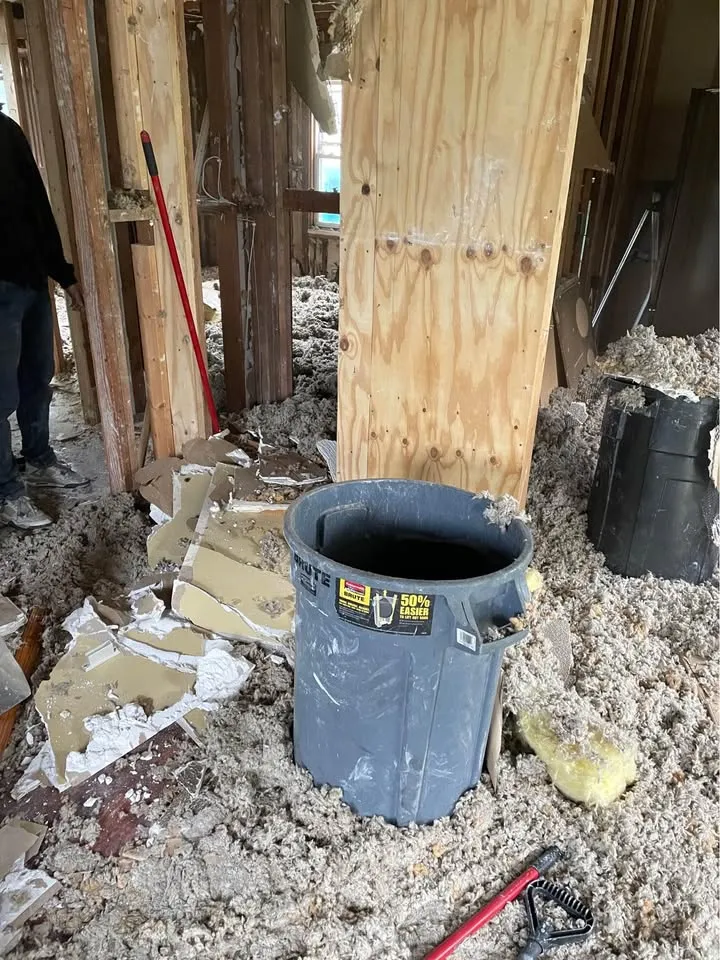
Kitchen cabinets, bathroom fixtures, damaged drywall and flooring are then removed only to the stated renovation boundary. Framing, doors, trim or services stay where the drawings or scope identify them for retention.
Plan for basement and occupied access
Basement units often have stairs, tight turns and a long route to the loading area. Measure that path and protect retained floors and doors where required. Appliances and dense material need a carry plan that does not rely on improvised lifting.
In an occupied building, the owner or manager coordinates common-area access, keys, parking and resident notices. The crew keeps tools and debris within the controlled unit and route.
Coordinate noise and one load-out
Toronto Municipal Code Chapter 591 governs construction noise. The existing noise guide should be used for current scheduling information rather than restating hours in the turnover scope. Quieter carrying and sorting still need orderly building access.
Coordinating the phases gives contents and accepted demolition debris an agreed loading sequence, but they remain separate material streams. The truck and container plan accounts for both rather than mixing prohibited items with drywall or lumber.
Know when to bring in a professional
A professional team is useful when a unit contains substantial belongings, dense appliances, multiple rooms of finishes or difficult stairs. The owner receives one written boundary for cleanout and demolition while retaining responsibility for authorisation, permits and designated-substance information.
A combined crew can also keep the building route under one access plan. Floor protection, door security, carrying paths and loading positions are established once, then adjusted as contents give way to demolition debris. That continuity helps the manager know who controls the common area and when it is returned for normal use safely afterward.
Anchor Demolition Scarborough sequences rental-unit cleanouts and strip-outs from contents to finishes, records retained areas and coordinates the load-out. The handover states whether rooms are cleared, selected finishes removed and loose debris swept for the next trade.
Questions about this topic
- Can the crew decide what abandoned belongings to discard?
- No. The landlord should resolve its obligations and provide clear authorisation before the visit. The crew follows the approved item and room scope but should not make legal decisions about ownership, storage or disposal of personal property. Uncertain items remain aside until the landlord gives direction.
- Why remove contents before cabinets and flooring?
- Contents hide work limits and can contaminate demolition loads. Clearing them first exposes the surfaces, services and damage that define the strip-out. It also allows furniture, appliances, personal records and hazardous products to follow appropriate streams instead of becoming buried beneath drywall, tile or lumber.
- Can cleanout and strip-out debris leave together?
- They can be removed during the same scheduled visit while remaining distinct material streams. Ordinary contents, recyclable items, regulated products and building debris have different handling requirements. The crew plans loading so prohibited material does not enter a demolition load and accepted material reaches the appropriate destination.
- How is noise handled in an occupied building?
- The work follows Toronto Municipal Code Chapter 591 and any reasonable building access rules set by the owner or manager. The existing noise guide provides current City scheduling information. Resident notices, elevator or hallway planning and controlled loading also reduce avoidable disruption beyond basic by-law compliance.
Continue planning
Check requirements for your property
For requirements discussed in this guide, consult the applicable municipality and current primary sources before arranging work.