
Material decisions
Floating or bonded flooring: different removal questions
By Anchor Demolition Scarborough · Updated
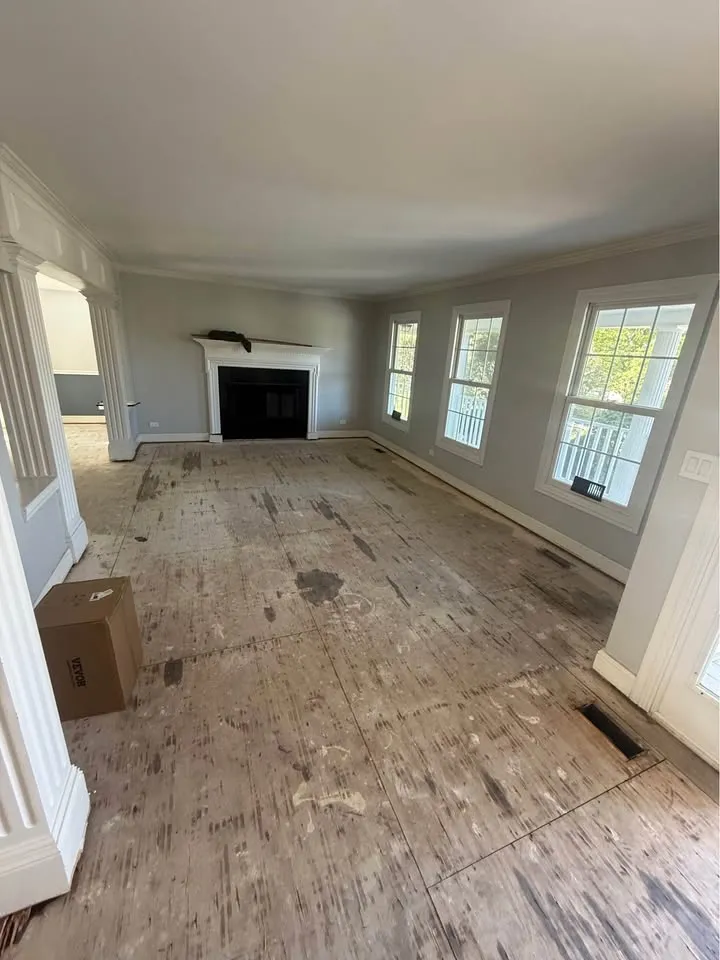
Anchor work-library image showing general scope. It is not an attributed project for this guide.
Why does the way a floor is attached matter when describing a removal request?
Confirm the attachment information room by room, then distinguish finish removal from underlay decisions and any separate surface preparation.
Start with records rather than a guess
Tell the assessor the visible floor type and whether installation records exist. An owner may describe laminate, wood or vinyl without knowing how it was fixed. Surface appearance alone should not become a statement that the floor is floating, glued or mechanically attached. Mark the attachment method unknown when it has not been established.
Ask separate questions for each arrangement
For an identified floating system, ask what happens to underlay, trims and transitions. For a bonded or mechanically fixed system, ask what remains on or in the receiving surface after the agreed removal. These are scope questions, not a promise of a particular method or a do-it-yourself procedure.
Avoid turning removal into restoration
A retained lower floor is not automatically ready for reuse once the upper finish leaves. The next contractor may need to assess residue, damage or preparation separately. Agree who receives the exposed surface and who decides whether further work is required. Do not include sanding, grinding or repair by implication.
Compare rooms independently
Different parts of a property may have different installation histories. Record each room and transition rather than treating matching surface colour as proof of the same assembly. A useful example is a living room with known floating flooring beside a hallway with an undocumented finish: the hallway remains an assessment item, not an automatic extension of the same removal instruction.
Details to bring to the discussion
Use the points below to explain the unresolved decisions when you contact the relevant service.
- Room and visible finish
- Installation evidence
- Attachment confirmed or unknown
- Underlay and trim decisions
- Separate surface-preparation responsibility
Continue planning
Check requirements for your property
For requirements discussed in this guide, consult the applicable municipality and current primary sources before arranging work.