
Material decisions
Tile removal: distinguish tile, mortar and backing
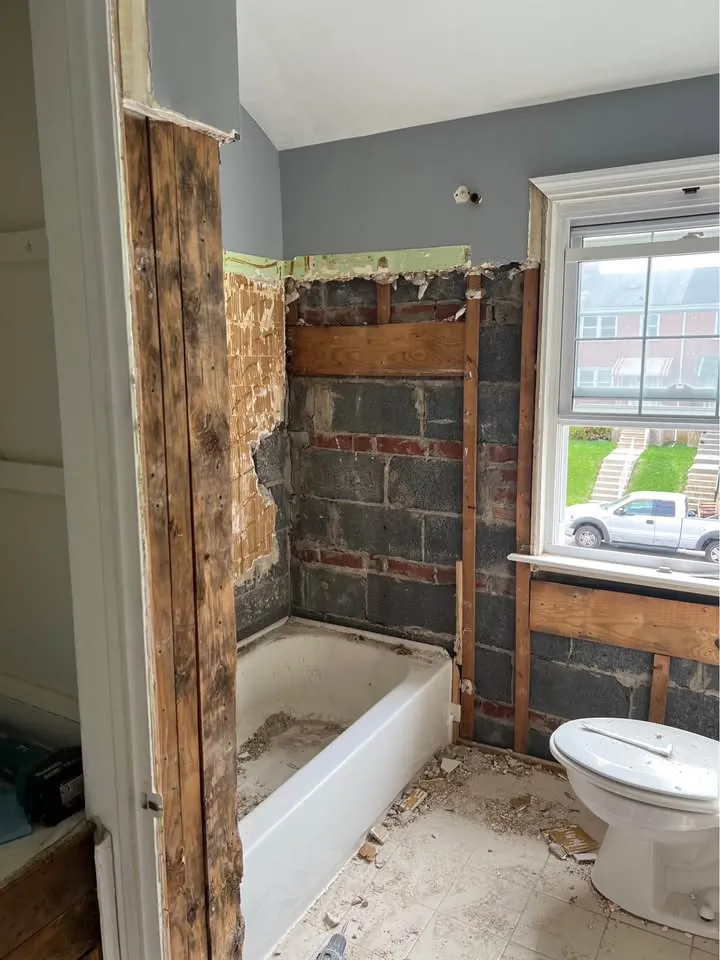
By Anchor Demolition Scarborough · Updated
Anchor work-library image showing general scope. It is not an attributed project for this guide.
Does a request to remove tile include the material behind or beneath it?
Name tile, setting material and backing separately, and ask the receiving installer to identify the surface the removal scope should expose.
Describe the assembly without guessing
A photograph can show the tile face but may not identify every layer behind it. Describe the room, wall or floor and any already visible edge. Tell the assessor whether existing drawings or earlier renovation records are available. Do not open a finish to discover the build-up merely to complete an enquiry.
Separate three decisions
Removing the tile face, removing its setting material and removing the backing are different requested endpoints. The incoming installer should identify what needs assessment for the proposed finish. Anchor can then define the removal boundary that is actually agreed. A request for bare floor or bare wall is ambiguous until the receiving surface is named.
Check adjoining retained finishes
Show the shower edge, doorway, cabinet base or neighbouring floor where the tile area ends. Ask how the removal scope will describe these transitions. A tile pattern crossing a doorway does not mean every tiled room is included. On a wall, record whether trim, fixtures and the opposite face remain.
Keep preparation and assessment separate
Material information must be resolved before disturbance. Removal does not automatically include adhesive treatment, levelling, waterproofing, repairs or preparation that another trade requires. As an example, an owner may request tile and setting material removal while retaining the backing if assessment supports that endpoint. The contractor and installer need to agree what happens if the exposed condition differs.
Details to bring to the discussion
Use the points below to explain the unresolved decisions when you contact the relevant service.
- Wall or floor reference
- Known and unknown layers
- Requested receiving surface
- Retained edges
- Installer contact and unresolved preparation
Continue planning
Check requirements for your property
For requirements discussed in this guide, consult the applicable municipality and current primary sources before arranging work.