
Debris removal
Can renovation debris go out with the garbage in Toronto, or do I need a haul-away?
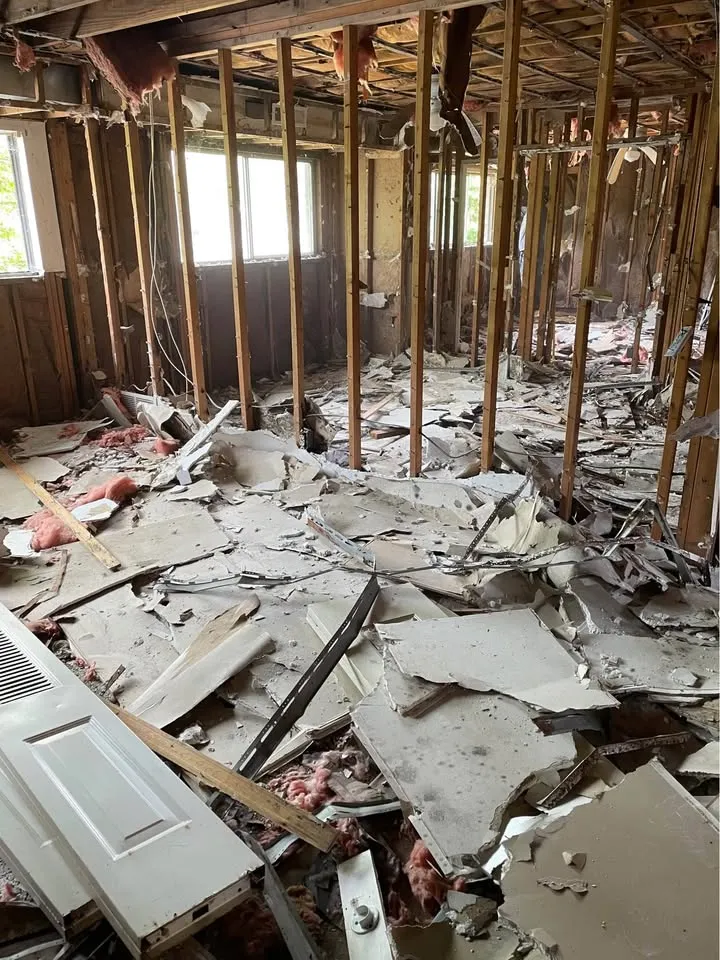
By Anchor Demolition Scarborough · Updated
Renovation debris cannot go out with regular Toronto garbage. The City's curbside collection does not accept construction and renovation materials such as drywall, lumber, tile, plaster and fixtures, so a resident must use an approved drop-off option or arrange a haul-away crew or bin.
The practical choice depends on what the debris contains, how it can leave the property and whether the resident has a suitable vehicle and loading plan.
Renovation material is not household garbage
Toronto's household collection system separates ordinary residential waste from material produced by construction, repair and demolition. Removed drywall, flooring, lumber, tile, plaster, cabinets and fixtures belong to the renovation stream even when the work took place in a house. Putting that material beside a household garbage cart does not change its classification.
The City's Solid Waste Management Services publishes current acceptance information and should be consulted for specific materials. A general list helps identify the issue, but it cannot cover every finish, composite product or contaminated item. Paint, solvents, fuel, cylinders and suspected asbestos-containing material require their own handling routes rather than ordinary renovation disposal.
Taking a resident load to a Drop-Off Depot
The City calls its resident disposal sites Drop-Off Depots, and they take some renovation material as waste, such as fixtures, tiles and flooring. They do not take concrete, brick, paving stones, asphalt or asbestos, and drywall is accepted only at the depots that take it for recycling. Check the City's Waste Wizard or call 311 before loading the car, because acceptance is confirmed by material and by depot. The Scarborough Transfer Station and the Drop-Off Depots are the City sites to confirm with Solid Waste Management Services before travelling.
A self-haul means sorting the load, choosing a vehicle suited to its weight and shape, securing every item and keeping within the vehicle and facility limits. Dense tile and plaster behave differently from bulky wood. Sharp edges, dust and loose fasteners also need control during carrying, loading and unloading. The resident remains responsible for the load from the room to the receiving point.
When a haul-away crew makes sense
A crew is useful when debris must be carried from a basement or upper floor, when the owner cannot safely move dense or awkward material, or when the prepared pile should leave during one collection visit. The crew reviews the route, protects retained areas as scoped, sorts material where practical and loads the vehicle from the agreed work zones.
This approach also suits a property without space for a container. It keeps loading responsibility with the removal crew, but the owner still needs to disclose unknown, hazardous or regulated material before arrival. The related demolition debris service explains how a prepared renovation pile is assessed and removed.
When a bin is the better fit
A bin can support a renovation that produces accepted debris over several work stages. The property needs a safe delivery and pickup path, a suitable placement area and a loading plan that keeps prohibited material out. Driveway width, overhead wires, turns and retained paving should be reviewed before the container is ordered.
A container that occupies a roadway, sidewalk, boulevard or public laneway requires City permission. The existing bin permit guide explains the difference between private-property placement and a Toronto Street Occupation Permit. A bin does not solve material sorting by itself; the person loading it must still follow the provider's acceptance rules.
What Anchor does about it
Anchor Demolition Scarborough reviews the debris, carry route and loading area before recommending direct haul-away or a container plan. The written scope identifies the rooms or piles included, materials that need another channel, sorting expectations and the broom-swept handover. The crew can remove renovation and demolition debris or combine that work with a broader junk and debris removal scope.
Questions about this topic
- Can drywall go beside my Toronto garbage cart?
- No. Drywall is construction and renovation material rather than ordinary curbside garbage, and only some Drop-Off Depots accept it for recycling. Check the City's Waste Wizard or call 311 to confirm where drywall is currently accepted before loading it, or arrange a crew or container that is approved for the material.
- Can I take renovation debris to the Scarborough Transfer Station?
- The City's Drop-Off Depots take some renovation material as waste, such as fixtures, tiles and flooring, and the Scarborough Transfer Station is one of the City's sites. Concrete, brick, paving stones, asphalt and asbestos are not accepted, and drywall only at the depots that take it for recycling. Check the City's Waste Wizard or call 311 before loading the car, then secure the load and keep within the vehicle limits on the drive.
- When is a haul-away easier than a resident drop-off?
- A haul-away is useful when material must be carried from inside, the load is dense or awkward, the resident lacks a suitable vehicle, or the prepared debris needs to leave in one collection. Site access and material acceptance still require review. A walkthrough confirms whether crew loading suits the actual debris and access.
- Does a renovation bin need a street permit?
- A container fully on suitable private property is different from one occupying public space. A bin on a roadway, sidewalk, boulevard or public laneway requires the applicable City of Toronto Street Occupation Permit before placement. Verify the approved placement before the container delivery is booked.
Continue planning
Check requirements for your property
For requirements discussed in this guide, consult the applicable municipality and current primary sources before arranging work.