
Residential demolition
Outdoor kitchens, brick barbecues and fire pits: removal before landscaping.
By Anchor Demolition Scarborough · Updated
An outdoor cooking area combines appliances, services, masonry and a base that the landscaper may need removed or retained.
The cleanest handover starts with the landscaping plan and works backward through gas, water, electrical, refrigerant, metal and concrete boundaries.
Cap the gas line first
A licensed gas technician disconnects and caps the supply to an outdoor grill, burner or gas fire feature before demolition. The owner confirms whether the line remains for a future appliance or is abandoned. The cap remains visible and protected according to the next trade's plan.
Electrical lighting, receptacles and water or drain connections also need the appropriate qualified trades. The demolition crew does not discover a service by breaking the cabinet or masonry around it.
Break masonry in controlled sections
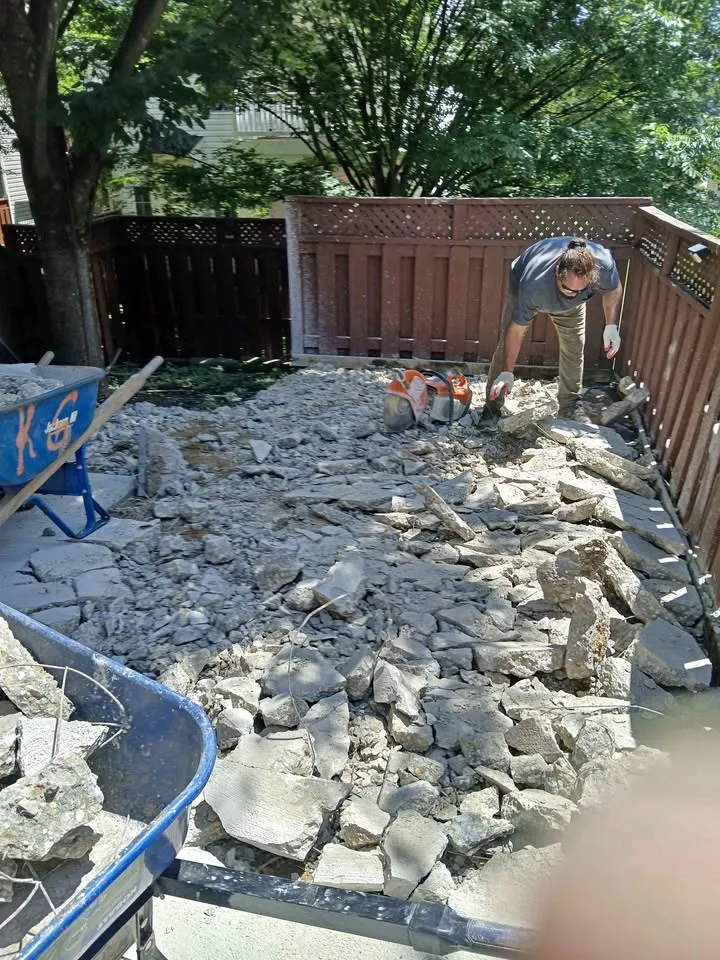
Brick, block and stone are reduced in manageable sections so falling material does not strike the house, fence, patio or planting that stays. Counters and caps come off before supporting masonry where that sequence keeps the assembly stable. Debris remains inside a defined loading area.
The concrete pad or footing beneath the structure is a separate decision. It can stay when suitable for the landscaper's plan or be broken and hauled when the new grade, planting or hardscape requires a clear footprint.
Handle appliances by condition and service
Built-in grills, sinks and metal frames are removed after their connections are released. Refrigerators and other refrigerant appliances require recovery by a certified technician before disposal. The crew separates eligible metal from masonry and mixed cabinetry rather than treating the complete kitchen as one material.
An appliance the owner intends to retain is labelled and moved before ordinary demolition. Anchor does not assess whether a used appliance is suitable for reconnection or promise a reuse outcome after it is removed from the enclosure.
Remove the fire pit and its base
A fire pit can include loose units, mortared masonry, a metal liner, a gas connection and a gravel, paver or concrete base. Each layer is recorded so the crew knows whether it ends at the visible ring or continues through the supporting surface.
Ash and unidentified fuel are cleared through the appropriate channel before ordinary masonry loading. A gas-fed feature follows the same licensed disconnection boundary as the outdoor kitchen.
Build the handover around landscaping
The landscaper should state what grade and base condition the new work requires. Retained patio edges receive a clean boundary, while removed pads leave an excavation or prepared area defined in the demolition scope. Soil replacement, drainage and final planting remain separate unless expressly included.
Access also follows the landscape plan. The crew protects retained gates, paving and garden areas along the route and avoids placing masonry debris where the next trade needs undisturbed ground.
Conclusion
Anchor Demolition Scarborough coordinates approved concrete, masonry, junk and scrap removal after the relevant trades release the services and refrigerant equipment. The written scope identifies every pad, footing and retained hardscape edge.
Professional help is appropriate when gas, water, electricity, heavy masonry or tight side-yard access complicates removal. A defined handover lets the landscaper begin with the condition expected rather than discovering buried fragments or an unplanned concrete base.
Questions about this topic
- Who caps an outdoor kitchen gas line?
- A licensed gas technician disconnects and caps the line before demolition begins. The owner also decides whether the service remains for a replacement appliance or is abandoned. The demolition crew works around the confirmed safe connection rather than cutting it during masonry removal.
- Does the concrete pad have to come out?
- Not always. The pad can remain if it suits the landscaping plan and is clearly excluded from demolition. Where new grading, planting or hardscape requires open ground, the scope can include breaking and hauling the pad to a defined final condition.
- Can an outdoor refrigerator go with the junk?
- Refrigerant must be recovered by a certified technician before the appliance enters an ordinary disposal or scrap stream. After that work, eligible metal can be separated. The crew does not load an unprepared refrigerator merely because it has already been disconnected from electricity.
- What should the landscaper confirm before removal?
- The landscaper should identify retained patio edges, required grade, base or footing removal and any area that must remain undisturbed. Those instructions let the demolition scope leave a suitable handover without assuming soil replacement, drainage or planting work is included.
Continue planning
Check requirements for your property
For requirements discussed in this guide, consult the applicable municipality and current primary sources before arranging work.