
Debris removal
Backyard junk cleanup in Scarborough: lumber piles, tires, old play sets and everything behind the shed.
By Anchor Demolition Scarborough · Updated
A backyard cleanup works best when the crew sorts material where it sits and keeps the side-yard route clear from the first load onward.
What looks like one pile often contains wood, metal, tires, equipment, household junk and containers that cannot travel together.
Identify what has accumulated
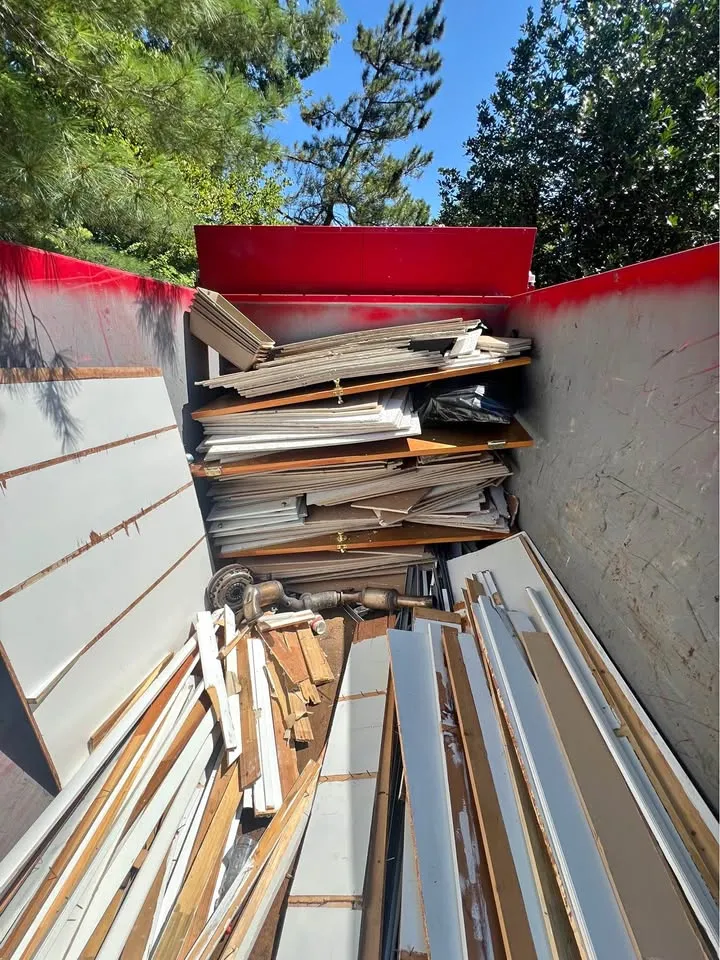
Common backyard material includes lumber, fence sections, tires, rusted play sets, garden equipment, old patio furniture and stored firewood. Items behind a shed or under vegetation can be difficult to see, so the walkthrough follows every accessible fence line and storage corner.
The owner identifies anything that remains before sorting begins. Reusable garden tools or current project lumber are moved to a protected keep area so they are not confused with weathered waste during loading.
Sort metal, wood and disposal material
Metal frames, eligible equipment and hardware can be separated for scrap. Clean or treated wood follows the receiving plan available for its condition, while upholstery, plastic and mixed household material go through suitable disposal channels. Rotten or nail-filled lumber is handled as debris, not offered as reusable material.
Sorting at the source reduces repeated handling and exposes small pieces hidden beneath large items. Sharp ends are controlled, and long boards are moved in a way that protects fences, windows and people using the access route.
Set aside tires, fuel and oil
Tires use an appropriate receiving stream rather than disappearing inside a mixed junk load. Containers or equipment holding fuel or oil are also set aside, even when they appear old or nearly empty. The guide on items prohibited from demolition and junk bins explains why ordinary loading stops at these materials.
Batteries, paint, propane cylinders and unidentified liquids receive the same cautious treatment. The owner is asked what the container held, but a missing label is not permission to pour it out or bury it in the load.
Plan access through the gate or side yard
Gate width, steps, turns, soft ground, low branches and air-conditioning equipment can shape the carrying route. Large play-set pieces or patio furniture may need controlled dismantling to pass without damaging the house or fence. The crew confirms that every item can reach the loading area before creating new piles.
Ground protection may be useful where repeated trips cross retained paving or soft lawn. If no side route is practical, the owner and crew discuss another lawful method rather than passing heavy material through finished living space without protection.
Leave the yard ready for its next use
After loading, the crew checks the cleared area and route for loose nails, wire, small plastic and visible fragments. Firewood that remains is stacked in the owner-approved location, and retained equipment returns to the keep area.
The handover can leave the space ready for mowing or for a landscaper to assess. It does not include grading, soil correction, vegetation removal or repair of conditions that were concealed under the pile unless those items are expressly added to another scope.
Conclusion
Anchor Demolition Scarborough sorts accepted backyard junk, dismantles approved bulky items and moves material through the available gate or side yard with a defined loading plan. The crew keeps tires, liquids and prohibited items outside an ordinary mixed load.
Professional support is useful when piles contain sharp lumber, heavy metal, a large play set or restricted access. Anchor can also coordinate the separately scoped removal of a deck, fence or shed when clearing loose contents reveals that the structure itself is next.
Questions about this topic
- Can tires go in the same load as backyard furniture?
- Tires are set aside for an appropriate receiving stream rather than hidden in an ordinary mixed load. Tell the crew how many are visible during the walkthrough, and do not fill them with smaller junk because that makes inspection and handling more difficult.
- What happens to old fuel or oil containers?
- They stay outside the ordinary junk load and follow an appropriate hazardous or regulated channel. Even an apparently empty container may hold residue. The crew does not pour contents onto the ground, mix liquids or rely on a missing label as proof of safety.
- Can a play set be dismantled during cleanup?
- Yes, when dismantling is included in the scope and the structure can be handled safely. The crew separates metal, wood, plastic and anchored components, then controls long or sharp pieces through the gate and side-yard route instead of forcing the assembly out whole.
- Will the yard be ready for a landscaper afterward?
- The agreed area is cleared of accepted loose material and receives a practical sweep for visible fragments. Grading, soil treatment, vegetation work and repair of hidden conditions remain separate unless written into another scope. The landscaper can then assess the exposed ground directly.
Continue planning
Check requirements for your property
For requirements discussed in this guide, consult the applicable municipality and current primary sources before arranging work.