
Commercial demolition
Construction site cleanup: rough clean, final clean and what builders expect.
By Anchor Demolition Scarborough · Updated
Construction cleanup supports the build by removing accumulated debris at planned stages rather than waiting for every trade to finish.
A debris crew handles load-out, sorting and a practical sweep, while detailed janitorial cleaning remains a different service.
Rough cleans keep the build moving
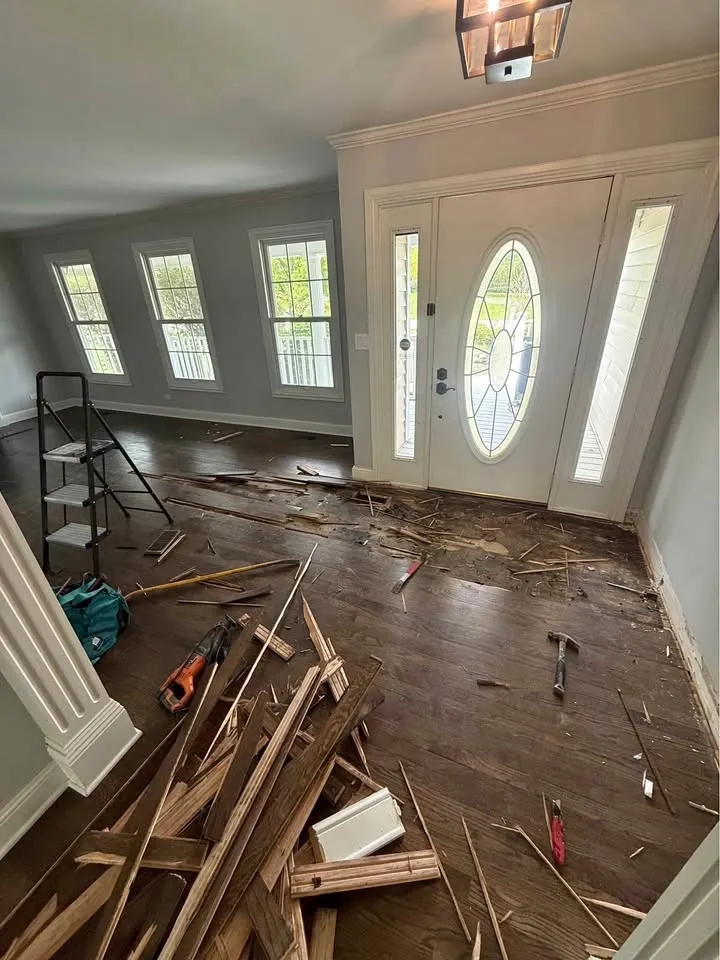
During framing, mechanical and drywall stages, offcuts, packaging and scraps can occupy floor space and block safe material routes. A rough clean gathers the approved debris, separates planned streams and clears the areas identified by the builder.
The crew needs to know which stock, temporary protection and trade materials remain. Nothing is removed because it looks unused. The site supervisor's marked scope controls each visit.
Final debris removal is not janitorial work
Before handover, the final debris pass removes remaining construction scraps, empty packaging and identified waste from work and loading areas. The crew sweeps loose fragments from the agreed surfaces so the builder can move into its finishing or cleaning stage.
Window washing, appliance detailing, washroom sanitation and fine-dust janitorial work are not implied. Keeping that boundary clear lets the builder schedule the correct team after debris is gone.
Sort material at the source
Metal, cardboard, clean wood and mixed construction debris can be staged separately where space and receiving arrangements support it. Sorting near the point of generation reduces rehandling and helps prevent prohibited material from disappearing into a mixed pile.
Drywall scraps, sharp fasteners and dense offcuts need stable containers or piles. Paint, solvents, cylinders and suspected designated material use their own approved channels rather than a general cleanup load.
Choose a bin or scheduled pickups
A bin works where the small lot has a safe private placement area and trades can follow loading rules. Scheduled pickups can suit a site where a container would block deliveries, occupy the only access path or create conflicts between phases.
Some projects combine both methods, using a container for steady accepted material and targeted collections for bulky or separated loads. The plan should reflect actual access rather than a preferred method chosen off-site.
Keep the street and neighbours clean
Debris must stay within the controlled site and approved container. The crew checks the route after loading, collects loose fragments and avoids using the roadway, sidewalk, boulevard or public laneway without the applicable City permission. The bin permit guide explains public-space placement.
On an active site, cleanliness also depends on communication between pickups. The supervisor identifies the next loading area, keeps trade materials out of it and reports any prohibited item before collection. A defined staging point prevents loose scraps from migrating toward neighbouring drives or being covered by later deliveries between scheduled cleanup visits on site.
Anchor Demolition Scarborough provides professional construction debris cleanup when repeated accumulation, constrained access or multiple material streams would distract the builder's crews. Each visit has a named work area, accepted materials and handover, with debris removal and sweeping stated separately from janitorial services.
Questions about this topic
- What is included in a rough construction clean?
- A rough clean gathers and removes the approved offcuts, packaging and construction scraps from the work areas named by the builder. It can include source sorting and a practical sweep. Trade stock, temporary protection and anything marked to remain are excluded unless the supervisor clearly changes the scope.
- Is final debris removal the same as post-construction cleaning?
- No. Final debris removal takes away remaining construction waste and sweeps loose fragments from agreed areas. Detailed dusting, window washing, appliance cleaning and sanitation are janitorial tasks and should not be assumed. The builder can schedule those services after bulky and loose debris has left.
- When do scheduled pickups make sense instead of a bin?
- Scheduled collections can work where a container would block the only driveway, loading zone or material route, or where debris appears at distinct project stages. A site visit should confirm carrying distance, truck access, sorting and where material can wait safely before each pickup.
- Can a construction bin sit on the street?
- Only with the applicable City of Toronto permission for public-space occupation. A container fully on suitable private property follows a different placement question. The truck route, tree protection, pedestrian movement and trade access still need review before any bin is delivered to a small site.
Continue planning
Check requirements for your property
For requirements discussed in this guide, consult the applicable municipality and current primary sources before arranging work.